

Enterprise Architecture
Enterprise Architecture (EA) is considered a comprehensive methodology for managing and defining the organization’s components, including operations, systems, data, and technology, in an interconnected manner aimed at achieving strategic objectives. The goal of applying this methodology is to reduce duplication in systems, improve the quality of investment decisions in information technology, and ensure the alignment of technology initiatives with long-term business needs.
Layers of Enterprise Architecture
Enterprise Architecture is usually divided into four main layers, which allows for an organized understanding of institutional complexity:
- Business Architecture: Describes the capabilities, processes, roles, and value models that reflect how the organization implements its strategy.
- Application Architecture: Describes the systems and software services that support the operations specified in the Business layer.
- Data Architecture: Focuses on defining the main data entities, their sources, information flow between systems, and governance and quality policies related to them.
- Technology Architecture: Focuses on the physical and virtual infrastructure, such as servers, networks, operating systems, platforms, and cloud services.
This division helps identify points of duplication and deficiencies, and facilitates communication between different work teams (business and technology).
A class diagram showing the layers of the organizational structure
Methodological Frameworks and Their Role
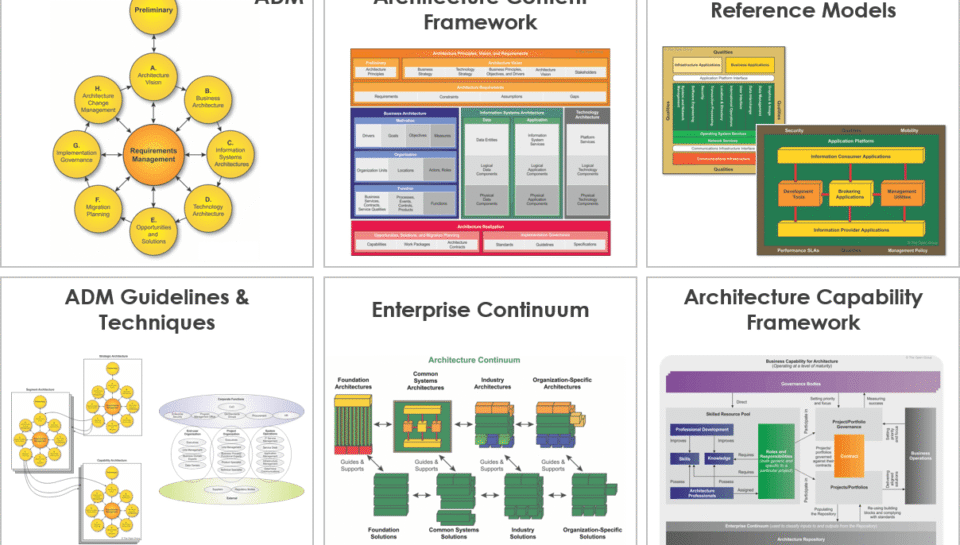
Organizations employ globally recognized methodological frameworks—such as TOGAF (The Open Group Architecture Framework)—and modeling languages like ArchiMate to provide a standardized methodology for developing enterprise architecture. These frameworks enable the creation of clear maps of capabilities, processes, and systems, thereby supporting planning for future changes and assessing their impact across different architectural layers.
Supporting Digital Transformation and Decision-Making
Enterprise architecture supports digital transformation initiatives by providing a holistic view of both the current state (“As-Is”) and the target state (“To-Be”). Organizations can leverage architectural maps to identify high-priority projects that deliver the greatest strategic value. This helps reduce fragmented and conflicting initiatives, ensures more effective technology investments, and ultimately enhances operational efficiency and innovation capacity.