

RAG
Artificial intelligence (AI) is revolutionizing the way organizations operate, with two particularly transformative areas emerging: Retrieval-Augmented Generation (RAG) and AI Automation.
Retrieval-Augmented Generation (RAG)
RAG is an advanced approach for building Large Language Model (LLM)-based systems capable of generating accurate, reliable, and contextually grounded responses by leveraging up-to-date information from an organization’s internal knowledge repositories. This method combines the generative power of AI language models with intelligent retrieval mechanisms that fetch the most relevant content from the organization’s knowledge base before formulating a response.
Key Components of a RAG System:
- Input Layer: Receives the user’s query.
- Retrieval Layer: Searches the organization’s knowledge repository—which may include internal documents, databases, or unstructured content—to extract the most relevant passages.
- Generation Layer: Employs a Large Language Model (LLM) to synthesize a coherent, contextualized answer based on both the user’s query and the retrieved information.
RAG significantly enhances output accuracy, mitigates the “hallucination” problem common in purely generative models, and enables AI systems to effectively leverage an organization’s specialized and current knowledge. Enterprises deploy RAG to power internal virtual assistants for employees or to enhance customer service centers by providing fast, tailored responses to frequently asked questions.
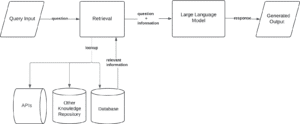
RAG diagram showing the process flow from user question to retrieval to generation
AI-Powered Automation (AI Automation)
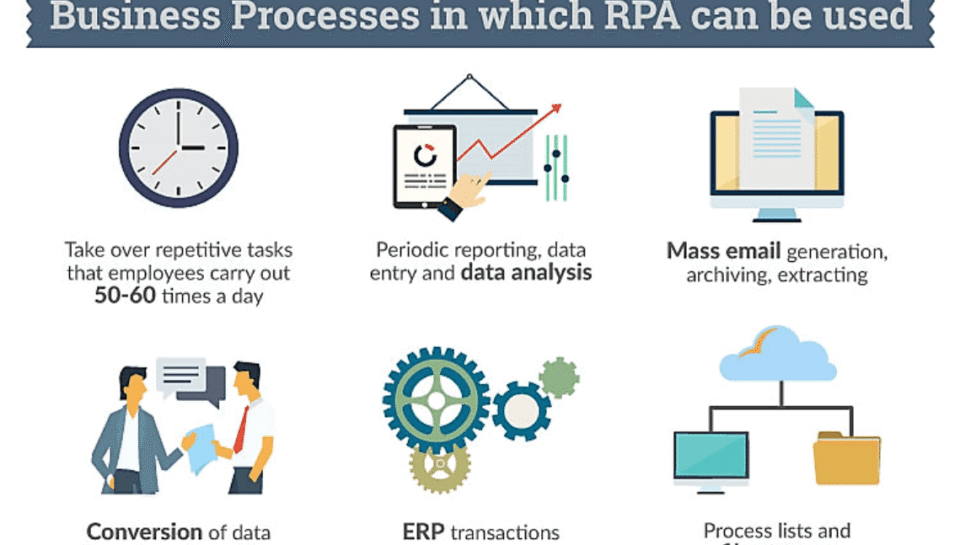
AI automation focuses on leveraging intelligent algorithms to automatically perform repetitive or complex tasks. By integrating artificial intelligence with Robotic Process Automation (RPA), organizations can develop advanced solutions capable of reading documents, extracting structured or unstructured data, and making simple, rule-based decisions—mimicking human judgment with greater speed and consistency.
Key Benefits of AI Automation:
- Time and Cost Savings: Routine tasks are executed faster and with fewer resources.
- Reduced Human Error: Processes are carried out consistently and accurately, minimizing mistakes.
- Enhanced Customer Experience: Faster response times and precise handling of requests improve service quality.
Applications Across Functions:
AI automation is widely used in areas such as:
- Classifying and routing IT or customer support tickets
- Automating compliance verification workflows
- Detecting anomalies or outliers in operational or security data
- Supporting business continuity, governance, and cybersecurity teams through intelligent alerts and interactive dashboards that provide real-time insights
Critical Success Factors:
For AI automation initiatives to deliver sustained value, organizations must invest in effective change management and upskill employees to collaborate with intelligent systems—shifting mindsets from resistance to augmentation. This human-AI synergy unlocks greater operational efficiency while empowering teams to focus on higher-value, strategic activities.
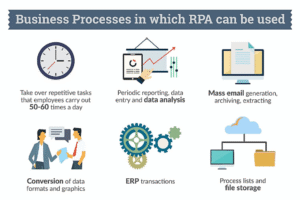
Infographic combines RPA and AI in one process line